
The Martin Las Vegas: What I Know That You Don’t
June 3, 2026
Where to Live Near the Las Vegas Strip
June 7, 2026Metropolis Las Vegas: The 1927 Film Nobody Forgot — and the Building That Proved It Right
Shari Sanderson | Las Vegas Condo Mania | Award Realty | License# S.0067305
Michelle Manley | License# BS0143009
Over 5,000 Las Vegas Condos Sold | $1 Billion+ in Sales
In Fritz Lang’s 1927 film Metropolis — the movie this building was named after, set in the exact year we are living in right now — the premise is brutally simple: there are two types of people in this world. Those who live in a penthouse, and those who don’t.
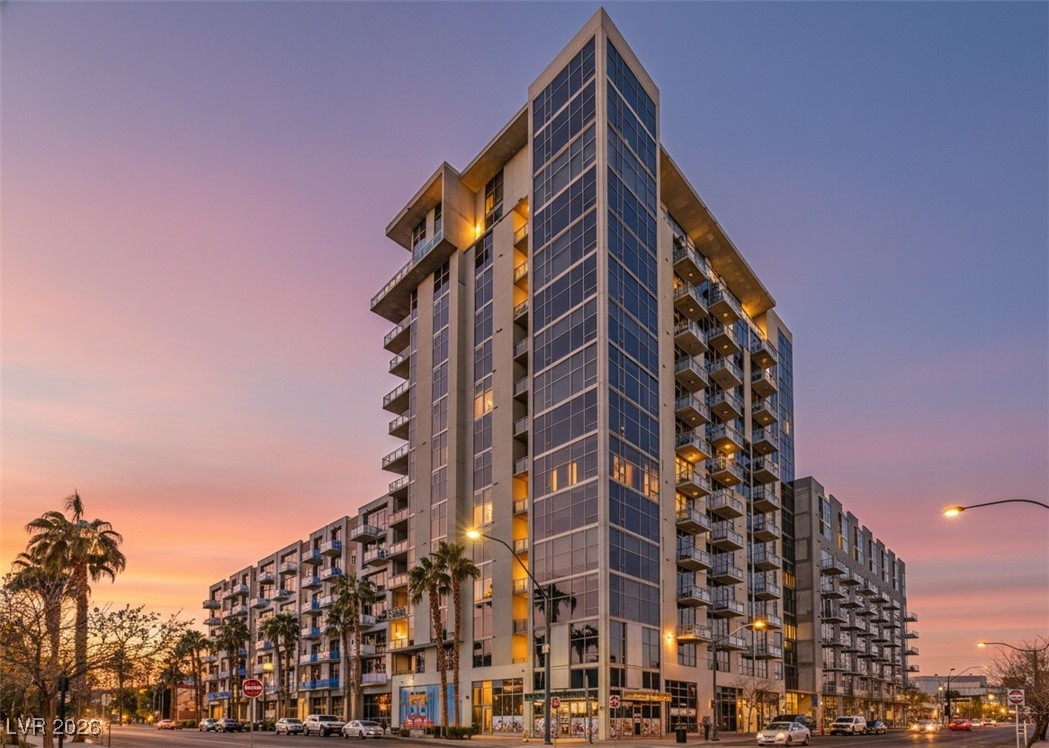
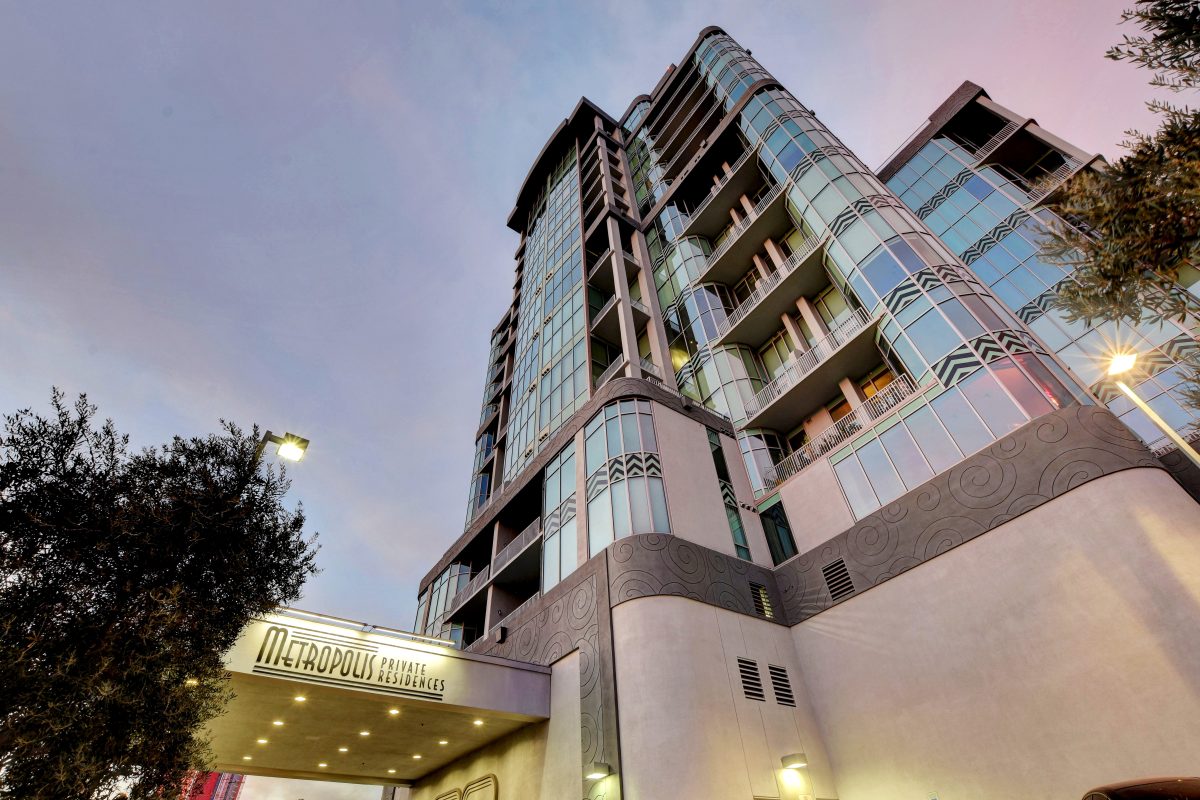
A developer named Randall Davis decided that premise was unacceptable. He built 71 Metropolis luxury high-rise condos for sale at 360 E. Desert Inn Road in Las Vegas and made every single one of them feel like a penthouse.
The Poster in the Lobby
There is a poster in the lobby of a Las Vegas high-rise that stopped me cold the first time I came through the door. Not because it was large, or dramatically lit, or positioned where you couldn’t miss it — though all of that was true. It stopped me because of the obvious: I was standing in the lobby of Metropolis luxury high-rise condos, and here was an old movie poster called Metropolis. I needed to know the correlation.
The image is unmistakable if you’ve seen it before, and haunting if you haven’t. A gleaming city of impossible towers, geometric and gold. A woman rendered in chrome and light, half human, half something else entirely. The word Metropolis arched across the top in letterforms that feel simultaneously ancient and futuristic. It is one of the most famous film posters ever printed — a 1927 German Expressionist masterpiece advertising Fritz Lang’s silent film of the same name.
I stood there for a long time, looking at it. Then I looked up at the building around me — the soaring lobby, the Art Deco lines, the name etched above the entrance. And something clicked.
The building was called Metropolis, too.
I pulled out my phone and looked up the film. What I found kept me occupied for the better part of an evening, and it has stayed with me ever since — because Fritz Lang’s Metropolis was set in the year 2026. Not approximately. Not “the near future.” The exact year we are living in right now.
That poster never left my mind. I have been through every high-rise building in this city over the years. Most agents don’t even know Metropolis exists. It has never gotten the attention it deserves. And standing there in that lobby in 2026 — the year the movie predicted — I finally understood why this building had always stayed with me. It was never just a building. It was an argument.
Building Facts: Metropolis Luxury High-Rise Condos Las Vegas
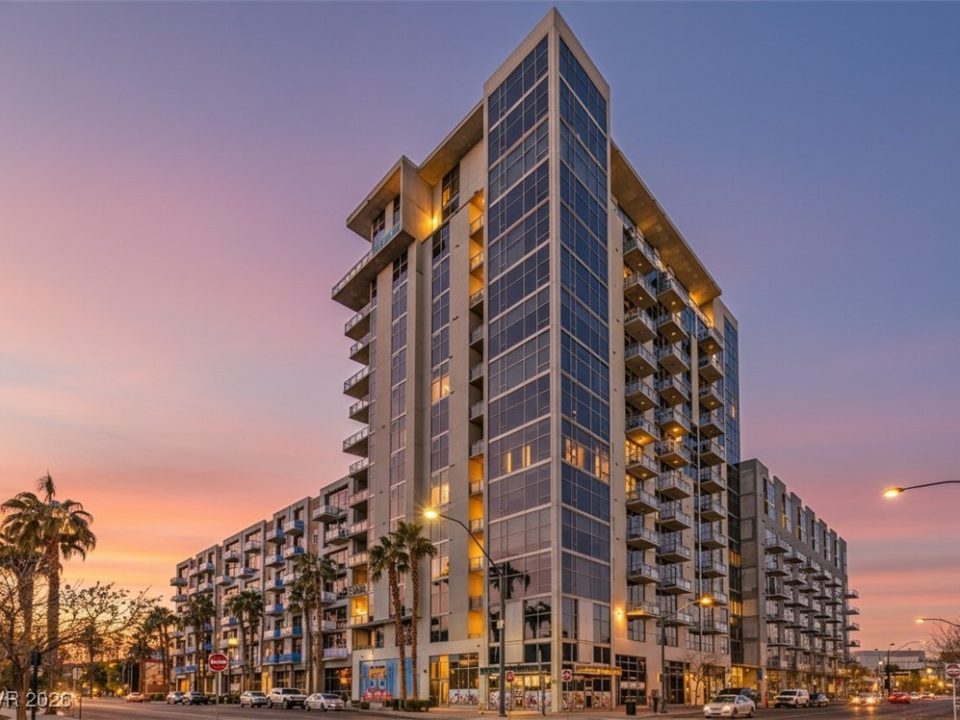
360 E. Desert Inn Road, Las Vegas, NV 89109
Developer: Randall Davis, Houston, TX
Completed: 2005 — First occupancy November 2005
Stories: 19
Total Residences: 71
Unit Sizes: 877 – 4,614 sq. ft.
Style: Art Deco high-rise — loft-style and flat residences
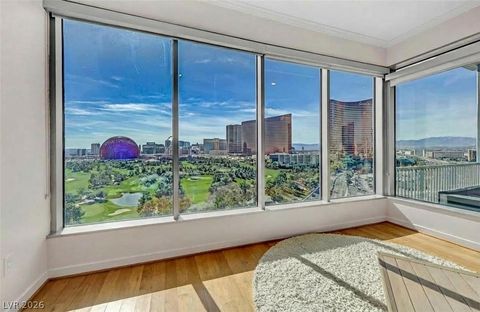
Views: Wynn Golf Course, The Sphere, Las Vegas Strip
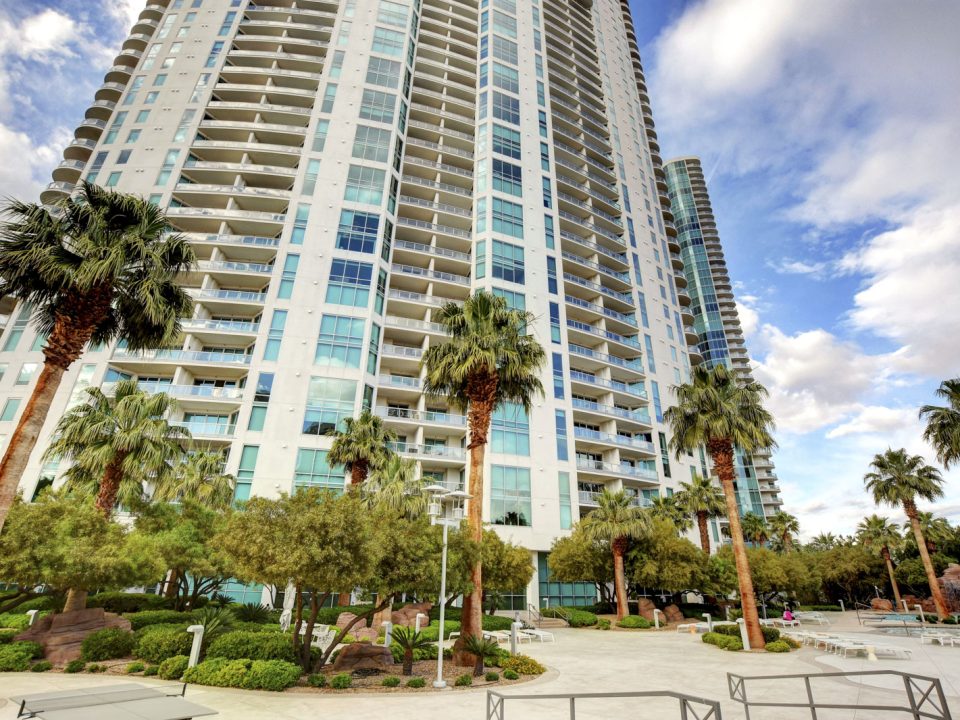
Amenities: 24/7 concierge, pool and spa, fitness center, wine room
Part One: What a Filmmaker Saw One Hundred Years Ago
Fritz Lang began production on Metropolis in 1925 and completed it in 1927. It was the most expensive silent film ever made — a German production that consumed roughly five million Reichsmarks and nearly destroyed the studio that financed it. Lang cast 36,000 extras. He built a city. He imagined a world.
The world he imagined was divided, cleanly and brutally, into two halves.
Above ground: a gleaming city of towers and light, where a privileged class enjoyed gardens, stadiums, and pleasures beyond counting.
Below ground: a world of grinding machines and exhausted workers, people who lived only to keep the upper city humming — who were born, essentially, to serve a world they would never see.
A Scene From the Film — 1927
The workers in Lang’s underground city live by a shift clock. When the clock strikes the hour, they move in unison — shoulders bent, feet dragging — like a single organism that has forgotten it is made of individuals. There is a scene, early in the film, where the clock worker collapses at his machine. He is simply replaced. The machine does not stop.
Lang was not making a movie about machines. He was making a movie about what happens to human beings when systems grow large enough to stop recognizing them as human.
The film’s most famous creation is a robot — built in the image of a woman named Maria, who is the workers’ spiritual leader and the story’s moral compass. The scientist Rotwang constructs a metallic duplicate to impersonate her, to manipulate the workers, to sow confusion between what is real and what is fabricated. The robot Maria becomes an agent of chaos dressed in the appearance of truth.
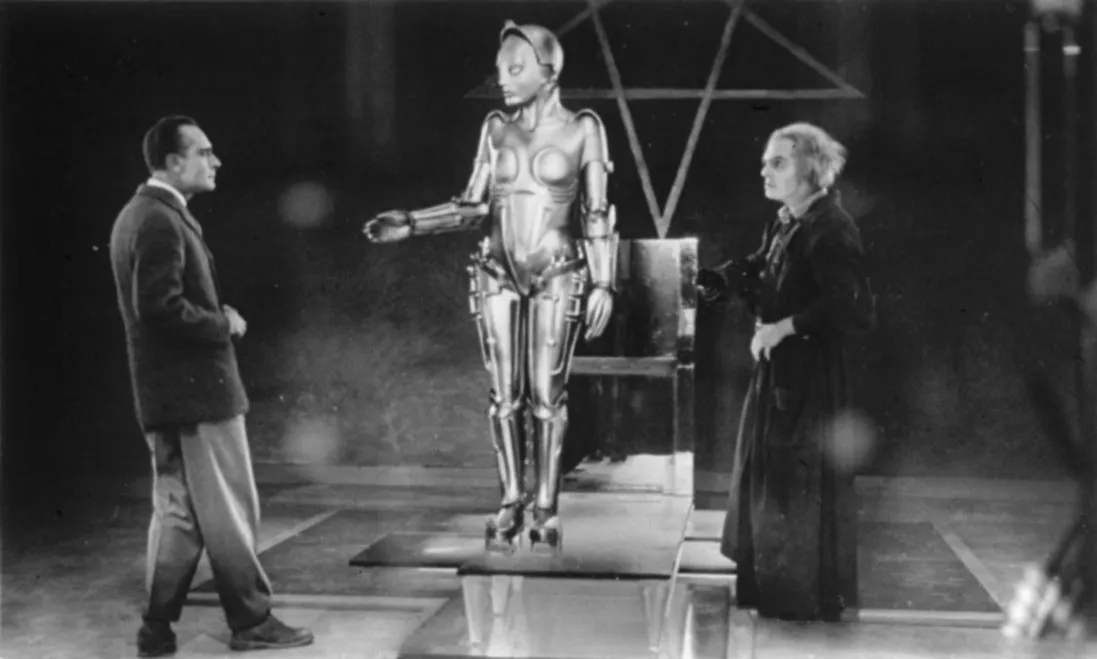
In 1927, this was science fiction. By 2026, it has acquired different names: deepfakes, synthetic media, AI-generated voices, algorithmic manipulation. The technology is no longer fictional. Only the chrome has changed.
Lang didn’t predict robots. He predicted the anxiety of not being able to tell what’s real — and who controls the difference.
Part Two: The Prophecy That Arrived on Schedule
There is something vertiginous about living in the year a hundred-year-old film predicted. Metropolis was not a subtle warning — it was a blueprint. And when you look up at any major American city in 2026, it is difficult to unsee what Lang drew.
The towers are taller now than even he imagined. The gap between the people who inhabit their upper floors and the people who service them has widened, quietly and persistently, across the intervening century. The wealthiest Americans now hold more of the country’s assets than at any point since the Gilded Age. The cities built by technology’s winners have some of the country’s highest rates of homelessness visible from the lobby windows of their gleaming headquarters.
Then vs. Now — The Film vs. The World
Metropolis the Film (1927):
Upper city of towers and light, access by birth. Underground workers powering the elite’s world. A robot spreading synthetic misinformation. Technology accelerating inequality. Workers invisible to those above them. One man controls the entire system.
The World Today (2026):
Luxury towers in cities with record homelessness. Gig workers and service economies below the surface. AI deepfakes and synthetic media proliferating. Automation displacing labor at accelerating speed. Supply chains built on invisible human labor. A handful of tech platforms governing digital life.
Lang also got things wrong. He imagined the machines as enormous and visible — pistons and gears, workers physically chained to industrial apparatus. The machinery of our era is invisible. It lives in data centers in the desert, in server farms cooled by rivers, in code that runs without a body and makes decisions without a face. The workers of our underground don’t pull levers. They tap screens, deliver packages, accept terms of service they haven’t read.
But the architecture of the divide — who is above and who is below — remains remarkably intact.
Maria’s famous speech in the film calls for a mediator between the “head” and the “hands” — between power and labor. The head that thinks and the hands that build, she says, must be united by the heart. It is the film’s central thesis, and it is also the part of Lang’s vision most people have simply chosen to ignore in the intervening century.
The film was a warning. We watched it as entertainment.
Part Three: Irrational Exuberance — 360 E. Desert Inn Road
To understand Metropolis luxury high-rise condos Las Vegas, you have to understand the moment this building was born.
In 2001, when Randall Davis — a Houston developer with a reputation for boutique high-rise design — began selling residences at 360 E. Desert Inn Road, Las Vegas was not yet a high-rise city. The towers that would eventually transform the skyline were still years away. Davis was early, and he was building something genuinely unlike anything else in the market.
By the time the building rose in 2004 and 2005, the city had gone sideways with what economists would later call irrational exuberance. Construction costs surged. Steel and concrete prices spiked.

The math of the project shifted dramatically from what Davis had modeled when he first sold the units. He could have done what many developers in that era did — canceled the contracts, repriced the units at market rate, and recaptured the windfall the boom had delivered.
He didn’t.
Every buyer who had signed a contract got the unit they were promised at the price they were promised. All 71 units sold. Davis honored every deal. By the time the building reached final occupancy in November 2005, it had essentially broken even — a remarkable outcome given what the market was doing around it, and a testament to something increasingly rare in development: a builder who considered his word a fixed cost.
He could have walked away from every contract and made a fortune. He didn’t. Every buyer got exactly what Randall Davis promised them.
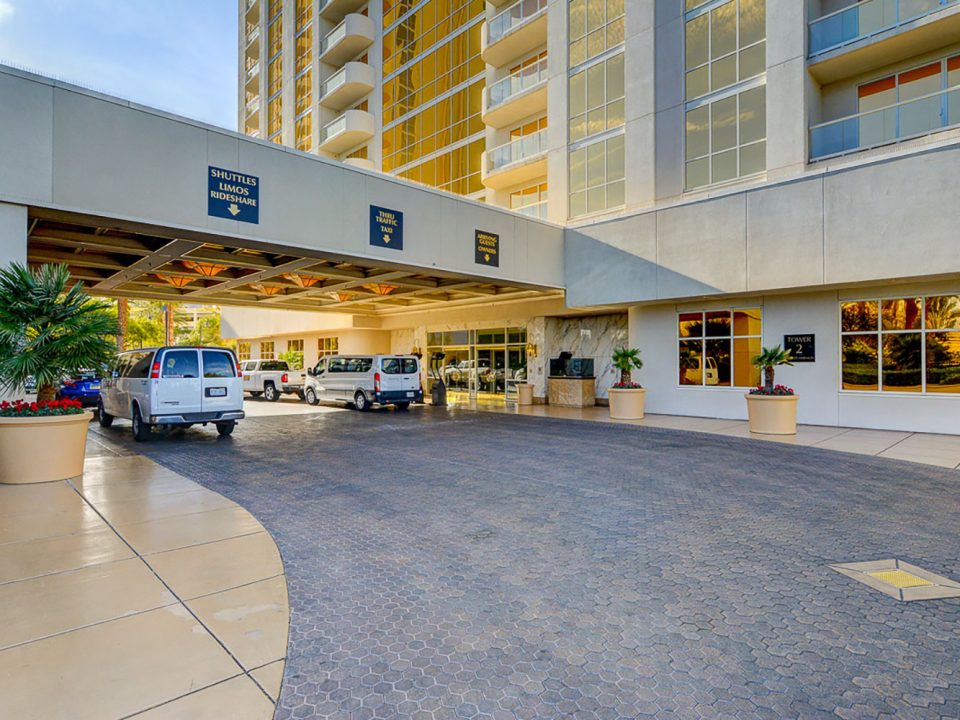
That integrity is woven into the building. You feel it in the way nothing was cut. Not the ceiling heights. Not the finishes. Not the closets — which in most buildings would qualify as additional rooms. Not the gallery-style entry corridors that make every front door feel like an arrival.
Davis built this building as though the film’s central question had only one acceptable answer: everyone who lives here deserves to live at the top.
Part Four: The Building That Answered the Question Differently
In Fritz Lang’s Metropolis, altitude is power. The penthouse is a birthright. The view belongs to those who were born to it. The underground is for everyone else.
Davis built a building where that hierarchy simply does not exist.
What Makes Metropolis Luxury High-Rise Condos Architecturally Extraordinary
Ceiling heights approaching 20 feet throughout — not just the penthouse floor. Two-story loft floor plans in the true architectural sense. Floor-to-ceiling glass on every level without compromise. Private terraces with unobstructed views. Gallery-style entry corridors that make every front door feel like an arrival. Closet and storage space that in most buildings would qualify as additional rooms. 71 residences ranging from 877 to 4,614 square feet. One of the most protected and unobstructed view corridors in all of Las Vegas.
Nearly every residence is designed as a loft — not in the loose, marketing-copy sense of the word, but in the literal architectural sense. Two-story units with ceiling heights approaching twenty feet. Floor-to-ceiling glass that does not compromise. The drama of the space does not diminish as you descend. The building was designed so that drama is not a function of altitude — it is a function of architecture itself.
My personal favorites are the corner units facing northeast. There is something about the way they capture the light and frame the Wynn Golf Course and the Strip in the same view that stops me every single time. But the two-story lofts will do it to anyone who has never been inside one. You step through the door, the ceiling disappears above you, the windows take over, and the city is just there — laid out like someone planned it specifically for this vantage point.
In Lang’s film, the view from above was reserved for the few. Davis built a building where everyone lives above it all.
The Views
Metropolis luxury high-rise condos at 360 E. Desert Inn Road sit just off Desert Inn Road in a position that has benefited enormously from what did not get built around it. While other Las Vegas towers have gradually found their sightlines narrowed by neighboring construction, Metropolis retains one of the most unobstructed corridors toward the Strip in the city.
The Wynn Golf Club unfolds below like a private park. The curves of the Sphere rise beyond it. Wynn, Encore, the evolving line of towers on the Strip — all of it arranged, from certain windows, like a painting commissioned specifically for the resident looking out.
It is, without exaggeration, one of the most distinctive residential views in Las Vegas. And it belongs to every floor — not just the top.
Most agents in this city have never set foot inside it. They don’t show it. They don’t talk about it. They drive past 360 E. Desert Inn Road on the way to somewhere else. I have never understood that.
My colleagues Michelle Manley and Kristine Murray feel the same way. The three of us have been fascinated by this building for years — drawn back to it again and again precisely because it refuses to behave like anything else in the Las Vegas high-rise market. We have watched buyers come through the door skeptical and leave converted. Every time. The building does the work. You just have to get someone inside it.
This building deserved more attention in 2005 and it deserves more attention now.
The Resolution: Both Stories End in 2026
I have thought about that lobby poster many times since the first day I saw it. I have thought about what it means to name a building after a film that is, at its core, a story about who gets to live at the top — and then design that building so the premise of the question collapses entirely.
Lang’s film ends with the mediator. The heart that bridges head and hands. In the film, it is a young man stepping between his father’s towers and his father’s workers, arms outstretched. In a Las Vegas residential tower named for the same myth, it is something simpler: architecture that refuses to create an underground in the first place.
There is no workers’ city beneath Metropolis Las Vegas. There is no tier of residents who got the lesser version. The building’s answer to the film’s central question — who deserves the view? — is that everyone who lives here does. That the height of your ceiling and the drama of your space are not rewards for being born on the right floor. They are the baseline.
Fritz Lang made his film in 1927 and set it in 2026 because he wanted the future to feel inevitable — because he believed the forces he was warning against would only compound over time. He was right about that. The forces compounded. The cities grew taller. The divides grew wider.
But every so often, someone builds something that points in a different direction. A building named after a warning that chose, quietly, to be an answer instead.
Now here we are in 2026 — the year the movie predicted. The poster is still in the lobby. The Metropolis luxury high-rise condos at 360 E. Desert Inn Road are still mostly unknown to the agents who should be showing them, still delivering a view that stops people cold the first time they see it. Still asking the same question Fritz Lang asked nearly a century ago.
And still answering it the same way Randall Davis did.
The movie was called Metropolis.
The building is called Metropolis.
And somehow, one of them became the rebuttal to the other.
Let’s Talk.

Shari Sanderson Las Vegas Condo Mania | Award Realty License #S.0067305
702-287-4290
lasvegascondomania.com
I was there from the beginning. I am still here. Call me.
Information reflects publicly available records and the author’s professional experience. Buyers should verify current pricing, availability, and HOA details at time of offer.
Condos for Sale at The Metropolis